Sun & Climate · September 16, 2026 · 6 min read
Top 5 Ways to Fade Sun Spots After an Idaho Summer
Long, sunny days are one of the best parts of living in the Treasure Valley, and the National Weather Service notes abundant sunshine here from spring through early autumn. By September, a lot of us look in the mirror and notice spots that weren't there in May, or old ones that got darker.
The American Academy of Dermatology (AAD) describes age spots, often called sun spots, as flat, darker marks that form on sun-exposed skin like the face and hands. They're very common, and there are good ways to help them fade. But the first step isn't a product. It's making sure the spot is actually a sun spot.
Before anything: get new or changing spots checked
The AAD recommends seeing a dermatologist for a skin exam before you buy any treatment for age spots, because skin cancer can look like an age spot. Treating a skin cancer as a cosmetic spot can give it time to grow. If a spot is new, changing, raised, bleeding, itchy, has uneven borders or multiple colors, have it looked at first.
Once a dermatologist has confirmed you're dealing with ordinary sun spots, here are the five approaches that help most, starting with the one that matters most.
1. Make daily sunscreen non-negotiable
This is the least exciting tip and the most important. The AAD notes that age spots can return after treatment, so sun protection is essential. Every fading strategy below works better, and lasts longer, when you protect your skin daily.
The AAD recommends a broad-spectrum, water-resistant SPF 30 or higher, plus shade, a wide-brimmed hat and UV-blocking sunglasses. A tinted sunscreen with iron oxide is worth considering: the AAD notes that iron oxide helps protect against visible light, which can worsen dark spots, especially in darker skin tones. Reapply every two hours when you're outdoors.
2. Be patient and consistent with brightening products
The AAD notes that many creams for age spots are available without a prescription, that some people need a prescription strength, and that creams usually need daily use for weeks to months. That's the honest timeline. A serum used for ten days won't tell you much.
Ask your dermatologist which ingredients suit your skin, and introduce one new active at a time so you can tell what's helping and what's irritating. Irritation itself can leave dark marks behind on some skin, so gentle and steady beats aggressive and inconsistent.
3. Exfoliate regularly, without overdoing it
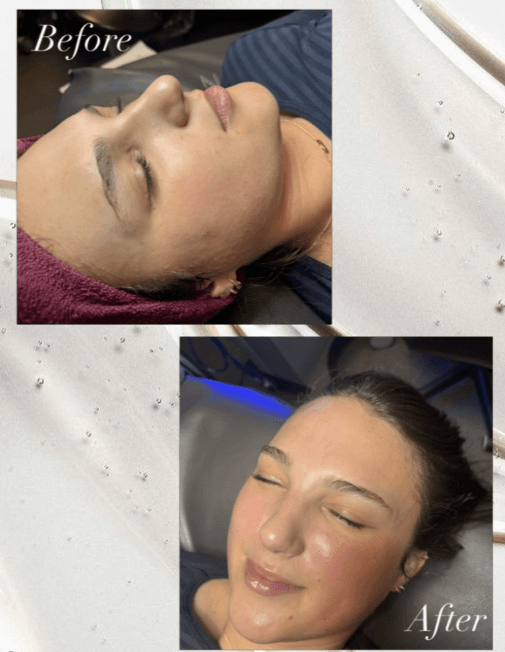
Sun spots sit in the upper layers of skin, so regular exfoliation can help their appearance by encouraging turnover and helping your brightening products work on a smoother surface. Professional dermaplaning removes dead skin and fine vellus hair, leaving the surface smoother so skin looks brighter and takes product more evenly.
In a dry climate, the risk is overdoing it. Exfoliating too often can leave your barrier irritated and dehydrated. A good rhythm for most people is a gentle at-home exfoliant a couple of times a week, plus a professional treatment every few weeks, adjusted to how your skin responds.
4. Consider a series of chemical peels
Chemical peels are one of the procedures the AAD lists for age spots. It cites a study of spots on the hands in which 47 percent of patients had at least 50 percent fading after a peel. The AAD also notes that adding a peel to microdermabrasion improved results in another study. Results vary from person to person, and spots usually fade gradually over a series rather than in one visit.
At BELA Aesthetics we offer light, esthetician-level chemical peels, which the AAD describes as healing in about one to seven days. Fall is a great time to start, since there's less intense sun on the calendar. The AAD is clear that sun protection before and after a peel is important to keep results and avoid discoloration, so we'll walk through aftercare with you. Deeper peels and lasers are medical procedures done by a dermatologist.
5. Know when a dermatologist's treatment makes more sense
Some spots are stubborn. The AAD describes laser treatment as often working within one or two sessions, and cryotherapy (freezing) as another fast option, though both can cause temporary side effects such as crusting, blistering or darkening. These are done by a dermatologist, and they can be a smart choice for a few defined spots that haven't budged with topicals and peels.
It's also worth knowing that not every brown patch is a sun spot. Melasma, for example, is a different condition that tends to show up as larger patches rather than individual spots, and it's handled differently. The AAD also lists seborrheic keratoses and actinic keratoses among the things that can be mistaken for age spots, so a proper diagnosis saves you time and money.
A realistic fall plan
Here's a simple approach for September through spring: get any new or changing spots checked, commit to daily tinted SPF, add one brightening product your dermatologist approves, and book a series of peels or dermaplaning facials spaced a few weeks apart. Keep moisturizing, because dry, irritated skin doesn't respond as well. By next summer, your goal is fewer new spots and lighter old ones, with sunscreen keeping them from coming right back.
It also helps to take a photo of your skin in the same spot, with the same light, before you start and then once a month. Fading happens slowly enough that it's easy to miss day to day, and photos make progress, or the lack of it, easy to see. If a spot changes in a way that worries you along the way, such as growing, bleeding or darkening unevenly, stop treating it and have a dermatologist look.
Key takeaways
- Have a dermatologist check new or changing spots before treating them.
- Daily broad-spectrum SPF 30+ is the foundation; tinted formulas with iron oxide add visible-light protection.
- Brightening creams take weeks to months of consistent use.
- A series of light peels or dermaplaning facials can help spots look lighter over time.
- Fall and winter are ideal seasons to work on spots.
When to see a dermatologist: See a dermatologist before treating any spot that is new, growing, raised, bleeding, itchy, irregular in shape or color, or different from your other spots. The AAD notes that skin cancer can look like an age spot, and that a dermatologist can also tell you whether a prescription cream or a procedure would work best.
Not sure what your skin needs?
Take our 60-second skin quiz for a personalized treatment match, or book a visit at our Garden City studio.
Questions
How long does it take for sun spots to fade?+
With creams, usually weeks to months of daily use, according to the AAD. Professional treatments can speed things up, but spots generally fade gradually.
Can a chemical peel remove sun spots?+
Peels can help sun spots look lighter, especially over a series. Results vary, and daily sunscreen afterward is essential to keep them from returning.
Is dermaplaning good for sun spots?+
Dermaplaning won't erase spots, but it smooths and brightens the surface and helps your brightening products work more evenly.
Why do my spots come back every summer?+
Sun exposure triggers them, so they tend to return without daily protection. The AAD recommends broad-spectrum SPF 30+, shade and protective clothing.
Sources
- American Academy of Dermatology: What can get rid of age spots?
- American Academy of Dermatology: Chemical peels FAQs
- American Academy of Dermatology: How to apply sunscreen
- National Weather Service Boise: Climate of Boise
Educational content from a licensed esthetician, not medical advice.