Dry & Sensitive Skin · October 28, 2026 · 6 min read
How to Fix Flaking Around Your Nose, Brows and Lips
You put on foundation, and suddenly every flake around your nose is on display. Your brows have a fine dusting of white. Your lips feel like paper. These three areas tend to flake first in cold, dry weather, and they're also the spots people are most tempted to pick, scrub or over-treat.
The fix is usually gentler than you'd expect. Here's why each area flakes, what tends to help, and how to tell when flaking is a sign of something a dermatologist should look at.
Why these three spots flake first
Lips are delicate and lose moisture quickly, and habits like licking them make it worse; the AAD notes that as saliva evaporates, lips get drier. The skin around the nose and mouth gets rubbed by tissues, masks and scarves, and takes a beating every time you have a cold. And the creases beside the nose and between the brows are areas where a common condition, seborrheic dermatitis, often shows up.
The Cleveland Clinic lists the face and the area around the mouth among the common places for dry skin, and notes it's often worse in winter and in low-humidity climates like the Treasure Valley.
Is it dryness or seborrheic dermatitis?
Plain dryness usually looks like fine white flakes on skin that feels tight, and it improves when you moisturize consistently. Seborrheic dermatitis tends to look a little different: flakes that can be yellowish or greasy, often with redness, in the folds beside the nose, in and between the eyebrows, along the hairline, and sometimes around the ears. It frequently comes with dandruff.
The American Academy of Dermatology (AAD) lists cold, dry weather, stress, hot showers, sweating and harsh products among the common triggers for seborrheic dermatitis flares. That's why it often appears in winter. It isn't something an esthetician diagnoses or treats, so if what you're seeing sounds like that description, the most helpful step is a dermatologist visit.
Calming flakes around the nose
Resist the urge to scrub. Rough scrubs and washcloths can leave the area red and more irritated. Instead:
- Cleanse with a gentle, fragrance-free cleanser and rinse thoroughly.
- Apply moisturizer while skin is still slightly damp, pressing it into the creases beside your nose.
- Use soft, lotion-free tissues sparingly during colds, and dab instead of wiping.
- Before makeup, let moisturizer sink in for a few minutes, then use a hydrating primer.
- Once the area is calm, a gentle exfoliant once or twice a week can lift leftover flakes.
Helping flaky brows
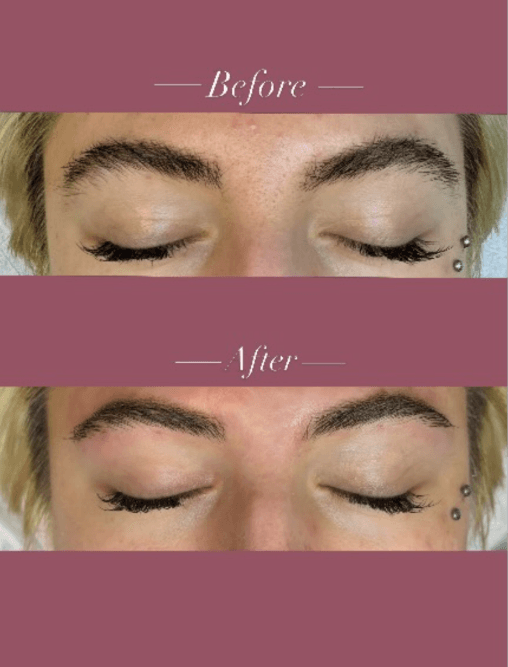
Flakes in the brows are easy to miss until they show up against dark hair or brow product. Wash your brows when you cleanse your face, rinse well, and follow with a fragrance-free moisturizer on the surrounding skin. The AAD's seborrheic dermatitis self-care tips also recommend alcohol-free products for skin and hair, which is worth remembering with brow gels.
If you're planning brow services, timing matters. We avoid waxing, tinting or lamination over skin that is irritated, flaking heavily, broken or inflamed, because it can make the irritation worse. Let the area calm first, then book. When your skin is comfortable, a brow wax and shape or brow lamination is a great finishing touch.
Healing chapped lips
The AAD offers clear, simple advice for dry, chapped lips:
- Choose gentle lip products and skip irritants like fragrance, menthol and flavorings.
- Apply a non-irritating balm several times a day and before bed; for very dry lips, use a thick ointment like petroleum jelly.
- Use an SPF 30+ lip balm outdoors and reapply every two hours.
- Stop licking, biting and picking at your lips.
- Don't hold metal objects like paperclips or jewelry in your mouth.
- Run a humidifier in your bedroom, especially if you breathe through your mouth at night.
Peeling lips: please don't pull
It's tempting to peel loose skin, but pulling often takes healthy skin with it and can leave lips sore. Coat lips in ointment before bed instead, and loose flakes tend to come off on their own. Tingling, minty plumping glosses feel refreshing, but they often contain the irritants the AAD suggests avoiding.
If you get lip waxing, skip it while lips or the skin above them are chapped or cracked, and moisturize well in the days before your appointment.
Also check what's touching your lips every day. Flavored balms, long-wear liquid lipsticks and some toothpastes can be drying or irritating for some people. The AAD recommends fragrance-free, hypoallergenic lip products. If your lips stay irritated, try going back to a plain ointment for a week or two and reintroducing products one at a time to see what your lips tolerate.
Treatments that can help once skin is calm
First, a word on makeup. Powder and long-wear foundations tend to cling to dry patches and make flakes more obvious. During dry months, many people do better with a cream or liquid formula over a well-moisturized base, applied with a damp sponge and pressed in rather than buffed. That alone can make flaky areas far less noticeable.
When flaking is from simple dryness and your skin isn't raw, a hydrating facial can help skin look smoother and feel more comfortable. Dermaplaning can lift dry surface buildup and leave makeup sitting more smoothly, but we'd only recommend it once the barrier feels normal again; dermaplaning over irritated, inflamed skin isn't a good idea. Your esthetician will look first and tell you honestly if a treatment should wait.
Most everyday flaking clears up within a week or two of gentle cleansing, consistent moisturizing and a humidifier. The AAD suggests that if chapped lips don't improve after two to three weeks of self-care, it's time to see a dermatologist.
Key takeaways
- Lips, the sides of the nose and the brows flake first in cold, dry air.
- Moisturize damp skin and skip harsh scrubs on flaky areas.
- Greasy or yellowish flakes with redness may be seborrheic dermatitis, which needs a dermatologist.
- Use SPF 30+ lip balm and thick ointment at night for chapped lips.
- Wait for skin to calm before waxing, tinting or dermaplaning.
When to see a dermatologist: See a dermatologist if flaking around the nose or brows comes with redness, greasy or yellowish scale, itching or dandruff, if it keeps coming back, or if chapped lips haven't improved after two to three weeks of self-care, which the AAD says can point to causes like an allergic reaction or infection. Also see one for sores on the lips that don't heal.
Not sure what your skin needs?
Take our 60-second skin quiz for a personalized treatment match, or book a visit at our Garden City studio.
Questions
Why does the skin around my nose flake?+
It's often simple dryness and friction from tissues and weather. Flakes with redness and a greasy or yellowish look can be seborrheic dermatitis, which a dermatologist should evaluate.
Can I get my brows waxed if they're flaky?+
It's best to wait until the skin is calm. Waxing over irritated or flaking skin can make it worse.
What's the best thing for chapped lips?+
The AAD recommends a gentle, fragrance-free balm through the day, a thick ointment like petroleum jelly at night, SPF 30+ outdoors, and no licking or picking.
Will dermaplaning get rid of flaky skin?+
It can lift dry surface buildup once skin is calm, but it isn't a good choice over irritated or inflamed skin. Moisturize first.
Sources
- American Academy of Dermatology: 7 dermatologists' tips for healing dry, chapped lips
- American Academy of Dermatology: Seborrheic dermatitis self-care
- American Academy of Dermatology: Seborrheic dermatitis diagnosis and treatment
- Cleveland Clinic: Dry Skin (Xeroderma)
- American Academy of Dermatology: Dermatologists' top tips for relieving dry skin
Educational content from a licensed esthetician, not medical advice.