Routines · November 4, 2026 · 6 min read
Does Hard Water Affect Your Skin? What Treasure Valley Residents Should Know
If your shower glass gets cloudy and your kettle collects white scale, you probably have hard water, and it's natural to wonder whether it's doing the same thing to your skin. Water softener ads certainly suggest so. The real answer is more nuanced, and the good news is that you can protect your skin either way.
We looked for a reliable, current hardness figure for Treasure Valley tap water and didn't find one we'd stand behind; numbers online vary widely and many come from companies selling softeners. Hardness can also differ by neighborhood, utility and well. If you want your exact number, check your water utility's annual water quality report or test your own water.
What hard water actually is
Hard water simply contains more dissolved minerals, mainly calcium and magnesium, picked up as water moves through rock and soil. It's safe to drink. The minerals are what leave spots on dishes and crusty buildup on faucets.
Those same minerals also react with soap. Instead of rinsing cleanly, some soap and cleanser binds with calcium and magnesium and leaves a residue behind. That's the familiar soap scum on the tub, and it's also the piece of the story that matters for skin.
What the research says
A 2018 study in the Journal of Investigative Dermatology by Danby and colleagues washed volunteers' skin with a common surfactant, sodium lauryl sulfate, using water of different hardness. Skin washed with hard water held on to significantly more surfactant residue. That residue increased water loss through the skin and caused irritation, especially in people with atopic dermatitis who carry a filaggrin gene variant. Softening the water reduced those effects.
But a larger trial points the other way on results people actually notice. The Softened Water Eczema Trial, published in PLoS Medicine in 2011, randomly assigned 336 children with moderate to severe eczema in hard-water areas to either a water softener or usual care. Researchers found no objective difference in eczema between the two groups. Both groups improved during the study.
It's worth noting the trial's limits. The researchers knew families would be able to tell whether they had a softener, because softened water makes more suds, so the eczema assessors were the ones kept blinded. The study also looked at children with eczema, not adults with everyday dryness. Still, it's the best-designed test of the question so far.
Putting those together: hard water can leave more cleanser residue on skin, and that can matter for sensitive or eczema-prone skin, but installing a softener isn't a proven fix. For most people, how you wash matters more than the water itself.
Signs your routine, not just your water, is the issue
If skin feels tight, squeaky or itchy after showering, look at these common culprits first:
- Hot water and long showers, which the American Academy of Dermatology (AAD) says strip skin (it recommends 5 to 10 minutes in warm water)
- Foaming or high-lather cleansers with strong surfactants
- Using cleanser all over, when the AAD suggests only where needed
- Rubbing dry instead of patting
- Waiting too long to moisturize after you get out
Simple steps that help, whatever your water
These are inexpensive and backed by dermatologist guidance:
- Choose a gentle, fragrance-free, non-soap cleanser. The Cleveland Clinic recommends this for dry skin, and milder cleansers leave less to bind with minerals.
- Use less cleanser and rinse thoroughly, especially along the hairline and jaw where residue collects.
- Keep showers short and warm.
- Pat dry and moisturize right away, while skin is still damp.
- Use a cream with ingredients like glycerin, ceramides or petrolatum to support your barrier.
Should you use micellar water or a filter?
Some people with very reactive facial skin like to cleanse with micellar water or a cream cleanser that wipes off, then splash with a little filtered or bottled water. There isn't strong research showing this improves skin, but it's low-risk if you enjoy it.
Shower-head filters are popular, but not every filter reduces calcium and magnesium, so check what a filter is actually certified to remove before you buy. The Danby study also found no clear effect from chlorine. A whole-house softener is a big purchase, and given the SWET trial results, it's not something we'd buy for skin alone. If you already have one, enjoy the easier cleanup.
Hard water and your hair, brows and lashes
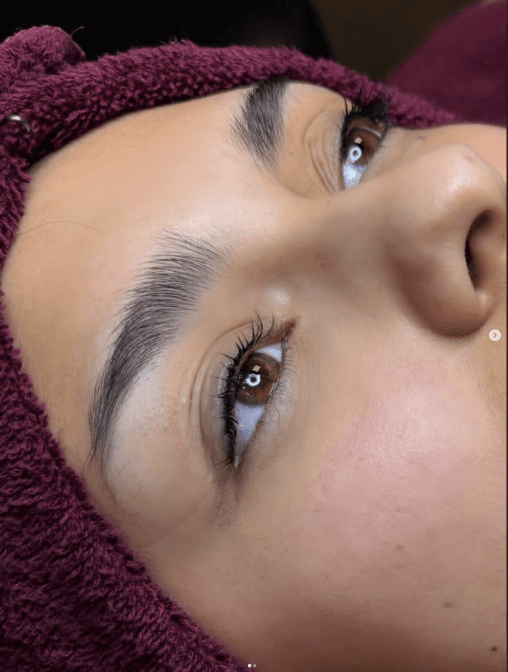
Mineral buildup can make hair feel rough or dull, and some people notice it on their brows too. A clarifying shampoo used occasionally can help hair. For brows and lashes, gentle cleansing and rinsing well is enough. If you're coming in for brow lamination, brow tint or a lash lift and tint, arrive with clean, product-free brows and lashes and we'll take it from there.
Dry air is likely the bigger factor here
If you're curious about your own water, the U.S. Geological Survey's Water Science School has a clear explainer on what hardness means and how it's measured. Your utility's annual water quality report should list a hardness value, and if you're on a private well, a basic water test will tell you.
In the Treasure Valley, low humidity is probably doing more to your skin than your tap water. The National Weather Service describes the area as semi-arid. A bedroom humidifier keeping indoor humidity between 30 and 50 percent, as the EPA recommends, often does more for tight, itchy skin than any change to your water.
If your skin feels dull or rough from buildup, a hydrating facial can help it look clearer and feel softer, and it's a good chance to talk through your cleanser and shower routine with an esthetician.
Key takeaways
- Hard water contains more calcium and magnesium and can leave more cleanser residue on skin.
- A 2018 study linked that residue to irritation, mainly in eczema-prone skin.
- A 2011 trial found water softeners didn't improve children's eczema.
- Gentle cleansers, short warm showers and prompt moisturizing help in any water.
- Check your utility's water quality report for your local hardness.
When to see a dermatologist: See a dermatologist if your skin stays red, itchy, scaly or cracked despite gentle cleansing and moisturizing, if you have eczema that's flaring, or if itching disrupts your sleep. Ongoing irritation is worth a proper diagnosis rather than blaming the water.
Not sure what your skin needs?
Take our 60-second skin quiz for a personalized treatment match, or book a visit at our Garden City studio.
Questions
Is Boise water hard?+
We didn't find a reliable, current figure we'd quote, and hardness varies by utility and source. Your water utility's annual water quality report is the best place to check.
Does a water softener help eczema?+
A large 2011 randomized trial in children found no objective improvement in eczema with a water softener compared with usual care.
Can hard water cause breakouts?+
There isn't good evidence that it does. Residue from cleansers may irritate sensitive skin, but breakouts usually have other causes.
What cleanser is best for hard water?+
A gentle, fragrance-free, non-soap cleanser, used sparingly and rinsed well. That's helpful advice regardless of your water.
Sources
- Danby SG et al. The Effect of Water Hardness on Surfactant Deposition after Washing and Subsequent Skin Irritation in Atopic Dermatitis Patients and Healthy Control Subjects. J Invest Dermatol. 2018
- Thomas KS et al. A randomised controlled trial of ion-exchange water softeners for the treatment of eczema in children (SWET). PLoS Medicine. 2011
- U.S. Geological Survey: Hardness of Water
- American Academy of Dermatology: Dermatologists' top tips for relieving dry skin
- Cleveland Clinic: Dry Skin (Xeroderma)
- National Weather Service Boise: Climate of Boise
- U.S. EPA: A Brief Guide to Mold, Moisture and Your Home
Educational content from a licensed esthetician, not medical advice.